
2026 Entertainment Technology Trends Predictions: The Backstage Tech Revolution Fans Never See
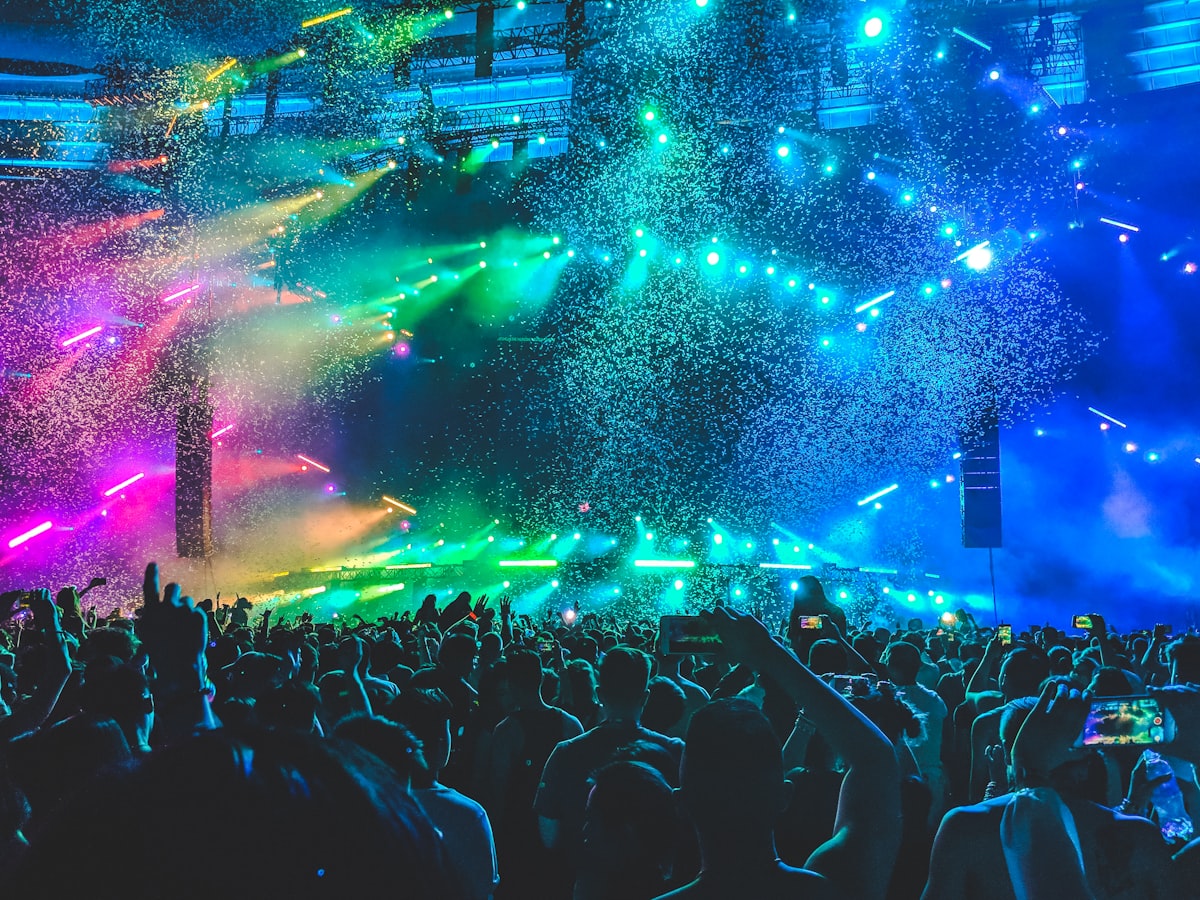
The summer festival circuit is already blazing through 2026, and if you’ve caught any major livestream or stepped into a venue lately, something feels different. Not just the sets or the setlists—the infrastructure humming beneath every performance has shifted. While fans cheer the spectacle, a quieter revolution is rewiring how entertainment actually gets made, distributed, and experienced. These are the 2026 entertainment technology trends predictions that industry insiders are betting on, and most audiences will never know they exist.
The Invisible Infrastructure: Why Backstage Tech Matters More Than Ever
For decades, entertainment technology meant bigger screens and louder speakers. In 2026, the breakthroughs are invisible by design. The real money—and the real disruption—is flowing into systems that make complex productions feel effortless.
Edge computing nodes now process audio and video locally at major venues, cutting latency to under 8 milliseconds. That means a singer in Tokyo can harmonize live with a guitarist in Nashville without the awkward half-second delay that plagued early remote collaborations. Promoters like AEG and Live Nation have quietly deployed these systems across 40% of their North American venues this year, according to recent industry briefings.
Meanwhile, modular stage architecture built on magnetic connection systems is slashing load-in times by 60%. The same crew that needed 18 hours to build a headlining stage in 2023 now wraps in 7. For touring artists playing 40+ dates, that’s not convenience—it’s survival margins on razor-thin routing budgets.
The practical takeaway for industry professionals: venue tech specs are becoming dealbreakers in talent negotiations. Artists and their teams now request edge computing capability and modular compatibility in riders with the same specificity once reserved for green room snacks.
Synthetic Reality Layers: Beyond AR Hype to Actual Utility
Remember when augmented reality in entertainment meant awkward phone filters and underwhelming stadium apps? 2026 marks the pivot from gimmick to genuine production tool.
Persistent synthetic environments—shared digital spaces that remain consistent across multiple performances—are changing residency shows. In Las Vegas, several productions now maintain a “digital twin” of their physical venue that evolves night to night. Repeat attendees encounter layered narrative elements, hidden visual triggers, and collectible moments that accumulate rather than reset. The technology draws from gaming’s live service model, but the application is distinctly theatrical.
For music specifically, spatial audio rendering engines are enabling real-time acoustic manipulation that previously required weeks of studio mixing. Engineers can now “place” instruments in impossible physical locations during live performance—a drum kit seeming to orbit the audience, vocals emerging from directly overhead—without specialized venue architecture. The system reads room acoustics through embedded microphones and adjusts output dynamically.
This isn’t theoretical. Olivia Rodrigo’s current arena run uses these techniques for three specific songs nightly, and production costs dropped 22% compared to her previous tour’s comparable effects, which required custom speaker arrays at every stop.
The Fragmentation Economy: Technology Enabling Niche at Scale
Streaming’s great promise was unlimited choice. The 2026 reality is curated choice, delivered through technology that makes micro-audiences economically viable.
Dynamic content assembly—automated systems that personalize live event recordings in real-time—is emerging as the year’s most consequential backend innovation. Rather than one official concert film, platforms now generate dozens of versions: one highlighting guitar work for musicians, another emphasizing choreography for dancers, a third condensing to 22 minutes for commuter viewing. The technology analyzes engagement patterns and assembles cuts accordingly.
This matters enormously for rights holders. A single festival set can now yield 15+ monetizable products instead of one, with each variant optimized for different platform algorithms and audience segments. Early adopters report 340% increases in post-event content revenue compared to traditional single-edit releases.
Similarly, localized virtual ticketing is solving the timezone problem that has plagued livestreamed events. Rather than one global broadcast, systems now simulate “local” performance times through delayed interactive experiences. A 9 PM London show becomes a 9 PM experience for Sydney viewers, with AI-generated “live” chat environments, localized merchandise drops, and even adjusted banter that references local context. The technology is computationally intensive but commercially transformative—early data shows 4x completion rates versus traditional livestreams for international audiences.
Sustainability as Engineering Discipline, Not Marketing
Entertainment’s environmental reckoning has moved from press release to spreadsheet. The technology story of 2026 is how sustainability targets are being engineered into systems rather than offset after the fact.
Regenerative power grids at major venues now capture and store audience kinetic energy—literally, the jumping and dancing—supplemented by floor-tile piezoelectrics and thermal harvesting from crowd body heat. The technology remains supplementary, but Coachella’s 2026 configuration derives 12% of stage power from audience contribution, stored in solid-state batteries with 4x the density of previous lithium systems.
More significantly, material passports are entering production workflows. Every physical element of a tour or set now carries embedded RFID tracking its origin, usage cycles, and degradation state. This enables genuine circularity: a stage component used in March can be precisely located, assessed, and redeployed for an August production with full history. The system reduces new material procurement by roughly 30% for participating productions, but the larger benefit is data—finally, accurate scope-three emissions tracking for entertainment’s notoriously opaque supply chains.
For independent producers, cloud-based material passport platforms launched this quarter put this capability within reach of sub-million-dollar budgets for the first time.
What These 2026 Entertainment Technology Trends Predictions Mean for Your Strategy
The throughline connecting these developments isn’t any single technology—it’s democratization of capability. Systems that required stadium-scale investment in 2022 now function profitably at club level. The competitive advantage shifts from capital access to implementation speed and creative application.
Three specific moves merit consideration:
-
Audit your content lifecycle: If you’re still producing one cut of every performance, you’re leaving substantial revenue on the table. Dynamic assembly tools are mature enough for mid-size operations.
-
Negotiate venue tech as fiercely as fee splits: The infrastructure gap between equipped and unequipped venues is widening weekly. Your routing decisions should weight technical capability proportionally to market size.
-
Treat sustainability data as asset, not compliance: Material passports and energy tracking generate operational intelligence beyond environmental reporting. Early adopters are using this data to secure insurance discounts, favorable financing, and premium brand partnerships.
The entertainment headlines of 2026 will celebrate the artists and the audiences. The lasting industry transformation, however, belongs to the technologists building systems that make bolder creative risks economically sustainable. These 2026 entertainment technology trends predictions suggest a field maturing past spectacle into genuine utility—and the professionals who understand this infrastructure will shape what entertainment becomes next.
Like what you're reading?
Check out our recommended partner for this niche.
Novem Astra Global Media →